

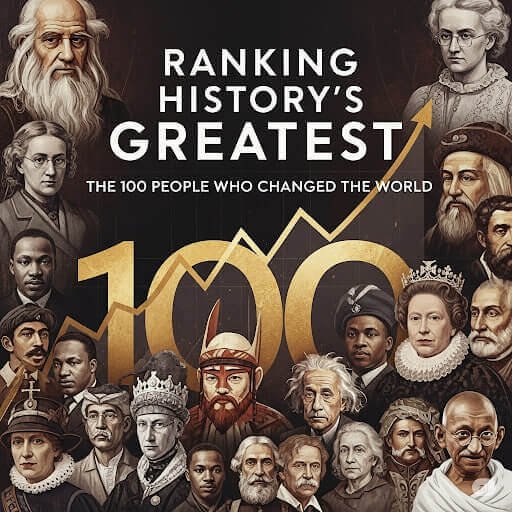
Introduction to Influential Figures
Throughout the annals of history, certain individuals have transcended the limitations of their time, leaving indelible marks on cultures, societies, religions, and sciences. These influential figures, often dubbed titans of their respective fields, have played pivotal roles in shaping the course of human development. From philosophers and scientists to leaders and artists, the contributions of such individuals resonate across generations, influencing present-day ideologies and practices.
The significance of these remarkable individuals can be traced back to their ability to challenge prevailing norms, inspire change, and pioneer thought processes that resonated beyond their immediate surroundings. By introducing innovative ideas or advocating for revolutionary social reforms, influential figures have not only altered the historical landscape but have also set the foundation for future advancements. Their lives and legacies serve as a testament to the potential of human ingenuity and the desire for progress.
This exploration into the lives of these iconic figures will recount their achievements and the broader contexts in which they operated. Indeed, their influences extend across multiple domains, including political leadership, scientific discovery, artistic expression, and spiritual guidance. The complexity of their contributions can be observed in the way they addressed challenges relevant to their times, and how their solutions have remained pertinent throughout history.
In examining the stories of these titans, readers will gain insight into the myriad ways in which individual actions can alter societal trajectories. As we delve deeper into the narratives of each influential figure, it becomes clear that understanding their impact is essential for grasping the full tapestry of human history. Their legacies continue to inform contemporary discourse, underscoring the timeless relevance of their ideas and actions.
1. Muhammad: The Founder of Islam
Muhammad, often regarded as the final prophet in Islam, emerged in the early 7th century as a pivotal figure who would reshape the religious and cultural landscape of the Arabian Peninsula and beyond. Born in Mecca around 570 CE, Muhammad’s early life saw him exposed to the rich traditions of Arabian culture, yet he was also deeply reflective and prone to contemplation over the prevailing social injustices. This introspection led to profound spiritual experiences that would culminate in what Muslims recognize as divine revelations.
At the age of 40, Muhammad began receiving messages from the Angel Gabriel, marking the inception of his prophetic mission. These revelations, which would later be compiled into the Quran, articulated a message of monotheism, social justice, and moral rectitude. The teachings not only provided a spiritual framework for Muslim believers but also challenged the existing tribal norms of the society. His emphasis on equality and brotherhood among the tribes became instrumental in the gradual unification of a region that had been historically fragmented.
The opposition Muhammad faced from Meccan leaders was significant, yet his conviction and charisma won him a diverse following. Following his migration to Medina in 622 CE, known as the Hijra, he further solidified his role as a leader, both spiritual and political. In Medina, he not only established a mosque but also implemented a community constitution that outlined rights and responsibilities, fostering unity among the diverse populations. Over the next decade, Muhammad successfully united various Arabian tribes under the banner of Islam, ultimately leading to the peaceful conquest of Mecca in 630 CE.
This unification under Islam, as articulated by various scholars, including Hart, exemplifies Muhammad’s extraordinary ability to inspire and galvanize individuals from disparate backgrounds. His legacy, evident in the continued growth of the Islamic faith and its principles, showcases his supreme success in transforming not only his immediate society but also influencing the course of world history. Through his teachings, Muhammad created a foundation that resonates across cultures and generations, solidifying his position as a titan of human history.
2. Isaac Newton: Catalyst of Modern Science
Isaac Newton, born on January 4, 1643, in Woolsthorpe, England, is often regarded as one of the most influential figures in the history of science. His groundbreaking contributions transformed the way we understand the natural world, solidifying his role as a catalyst of modern science. Among his most celebrated achievements are the formulation of the laws of motion and the law of universal gravitation, which together constitute the foundation of classical mechanics.
Newton’s three laws of motion, articulated in his seminal work “Philosophiæ Naturalis Principia Mathematica,” describe the relationship between a body and the forces acting upon it, leading to the body’s motion in space. The first law, often referred to as the law of inertia, posits that an object at rest will remain at rest, and an object in motion will continue in its state of motion unless acted upon by a net external force. The second law establishes a direct proportionality between force and acceleration, a fundamental concept still utilized in modern physics today. Finally, the third law states that for every action, there is an equal and opposite reaction, illustrating the reciprocal nature of force interactions.
In addition to his laws of motion, Newton’s law of universal gravitation transformed scientific understanding of how objects interact in space. This principle posits that every mass in the universe attracts every other mass with a force proportional to their masses and inversely proportional to the square of the distance between their centers. This insight not only explained the motion of celestial bodies but also facilitated advances in fields such as astronomy, engineering, and physics.
Newton’s emphasis on empirical observation and mathematical formulation underscored the importance of experimentation in advancing knowledge, a principle that continues to underpin the scientific method today. His contributions fundamentally altered humanity’s understanding of the universe, cementing his legacy as a central figure in the development of modern science.
3. Jesus Christ: The Central Figure of Christianity
Jesus Christ remains a pivotal figure in Christianity, serving as the bedrock upon which the religion was founded. His teachings, centered around love, compassion, and forgiveness, continue to resonate with millions around the globe. The message of Jesus emphasizes not only a personal relationship with God but also the importance of community and ethical behavior toward one another. His parables, which are simple yet profound, deliver teachings that encourage humility, mercy, and the pursuit of righteousness.
The miraculous events attributed to Jesus, including healing the sick, feeding the hungry, and raising the dead, further cement his position as a unique religious leader. These miracles are seen as signs of his divine authority, illustrating the transformative power of faith. The crucifixion of Jesus, a historical event marked by suffering, stands as a crucial moment that believers perceive as a sacrifice for humanity’s sins. This act is not merely a tragic end but serves as the foundation for the Christian doctrine of salvation, wherein his death and subsequent resurrection are celebrated as victories over sin and death.
The resurrection, a cornerstone of Christian belief, signifies hope and the promise of eternal life. It has far-reaching implications not only for those who follow the faith but has also influenced cultural and philosophical thought throughout Western civilization. Various interpretations of Jesus’ life and message have emerged over the centuries, resulting in diverse denominations and theological discussions. However, the central tenets of his teachings – love, redemption, and the call to serve others – remain universally relevant. As societies evolve, the figure of Jesus continues to inspire movements for justice, equality, and charity, cementing his role as a profound influence in the moral landscape of history.
4. Gautama Buddha: The Enlightened One
The life of Gautama Buddha, born Siddhartha Gautama in the 6th century BCE, marks a pivotal chapter in the spiritual history of humanity. Originating from a royal lineage in present-day Nepal, Siddhartha lived a life of privilege and luxury until he ventured outside the palace walls and encountered the harsh realities of life: old age, sickness, and death. These experiences profoundly affected him, leading to a quest for understanding the nature of suffering. At the age of 29, he renounced his royal life in pursuit of enlightenment, setting forth on a path that would ultimately lead to the establishment of Buddhism.
After years of rigorous ascetic practices and meditation, Siddhartha reached a state of profound insight under the Bodhi tree in Bodh Gaya, where he became the Buddha, or the “Enlightened One.” His awakening revealed the Four Noble Truths, foundational principles that outline the essence of human suffering. These truths state that suffering is an inherent part of existence, that it arises from attachment and desire, that it can cease, and that the path to freedom from suffering is attainable.
Central to Buddha’s teaching is the Eightfold Path, a practical guideline designed to cultivate ethical conduct, mental discipline, and wisdom. This path encompasses Right Understanding, Right Intent, Right Speech, Right Action, Right Livelihood, Right Effort, Right Mindfulness, and Right Concentration. These elements provide a framework for individuals seeking to alleviate suffering and achieve spiritual growth. Today, the teachings of Buddha resonate with millions across the globe, influencing spiritual and ethical considerations within various cultural contexts.
Buddhism, which has evolved into a global tradition, continues to attract practitioners who seek insight into the human condition and wellbeing. The enduring relevance of Buddha’s philosophies lies in their universal appeal, emphasizing compassion, mindfulness, and understanding as crucial elements for personal transformation and societal harmony.
5. Confucius: The Philosopher of Harmony
Confucius, known as Kong Fuzi, was a Chinese philosopher who lived during the Spring and Autumn period, from 551 to 479 BCE. His contributions to ethics, political philosophy, and education have made him one of the most influential figures in human history. Central to Confucianism is the notion of harmony, which emphasizes the moral fabric of society and the importance of proper relationships among individuals. His teachings advocate for a structured society where each individual recognizes their role, fostering ethical behavior and community cohesion.
One of Confucius’s most profound teachings revolves around the concept of “Ren,” often translated as “benevolence” or “humaneness.” He argued that true morality stems from a deep empathy for others and the cultivation of virtues such as kindness, sincerity, and respect. According to Confucius, individuals should strive for self-improvement and moral integrity, which would, in turn, promote harmony within families and, subsequently, the broader society. This emphasis on personal virtue was a significant departure from the prevalent political doctrines of his time, which often emphasized strict adherence to laws and protocols, rather than moral principles.
Confucius also highlighted the importance of education, asserting that learning was vital for personal development and societal progress. His belief that education should not be limited to the elite class allowed for the rise of meritocracy in Chinese society, where individuals could achieve status and respect through their knowledge and ethical conduct. His teachings laid the groundwork for the civil service examinations that dominated China for centuries, ensuring that leaders were selected based on merit and moral character rather than hereditary rights.
Confucius’s influence extended beyond his lifetime, establishing a philosophical framework that has profoundly shaped Chinese culture and societal values. His teachings continue to resonate in modern societies, reaffirming the enduring power of moral philosophy in fostering peace and harmony. Through his life’s work, Confucius became a titan of philosophical thought, leaving a legacy that transcends historical boundaries. In conclusion, the principles he espoused remain relevant, promoting ethical governance and interpersonal relationships today.
6. St. Paul: Early Christianity’s Key Evangelist
St. Paul, originally known as Saul of Tarsus, is often regarded as one of the most influential figures in early Christianity. His impact on the spread of Christianity beyond Jewish communities is profound and multifaceted. After a transformative experience on the road to Damascus, where he reported a vision of the resurrected Jesus, Paul became an ardent advocate for the new faith. This pivotal moment marked the beginning of his missionary journeys, which spanned various regions including Asia Minor, Greece, and eventually Rome.
During these journeys, Paul established numerous Christian communities and churches, effectively acting as a bridge between Gentile and Jewish believers. His emphasis on faith in Jesus Christ as the path to salvation was revolutionary and resonated with many non-Jews, prompting a significant expansion of Christianity’s reach. Through his travels, he not only preached but also engaged in theological discussions that frequently addressed the complexities of integrating Gentiles into the largely Jewish context of early Christians.
Furthermore, St. Paul’s epistles, many of which are included in the New Testament, are significant both for their theological content and their role in shaping Christian doctrine. These letters, written to various early Christian communities, provide insight into his thoughts on faith, ethics, and church governance. They explore key concepts such as grace, redemption, and the importance of love and community among believers. His articulate defense of the gospel also laid a foundation for Christian theology and established guiding principles for future generations. Paul’s unique blend of Jewish traditions and Hellenistic thought created a crucial framework for the development of Christian identity, making him a key evangelist in early Christianity.
7. Cai Lun: The Inventor of Paper
Cai Lun, a prominent figure in ancient China, is best known for his groundbreaking contribution to the world: the invention of paper. Born around 50 AD during the Eastern Han Dynasty, Cai Lun served in the imperial court, where he was deeply involved in various governmental roles. His quest for efficient communication and record-keeping led him to experiment with different materials to create a writing medium that was not only functional but also accessible to the masses.
The innovative process devised by Cai Lun in 105 AD involved combining fibers from plant-based materials such as hemp, mulberry bark, and rags with water, then pressing and drying the mixture to form sheets. This method laid the foundation for what we now recognize as traditional paper. Before Cai Lun’s invention, people primarily used bamboo, silk, and wood for writing, which were often cumbersome and expensive. His development of paper not only reduced costs but also made written communication available to a broader audience.
The impact of this invention was profound. Paper revolutionized the way information was recorded and shared, facilitating advancements in literature, education, and administration. It played a crucial role in the dissemination of knowledge across various cultures. As trading routes expanded, so did the use of paper. By the time of the Tang and Song Dynasties, paper had become a staple in Chinese society and started to spread to other parts of the world through cultural exchanges and trade.
In essence, Cai Lun’s invention of paper transformed human communication, leaving a legacy that persists to this day. The proliferation of paper not only advanced literacy but also fostered the exchange of ideas, thereby shaping the evolution of societies across continents. His innovative spirit and contributions solidify Cai Lun’s place among the titans of human history.
8. Johannes Gutenberg: The Printing Revolutionary
Johannes Gutenberg, a German blacksmith and inventor, is best known for introducing the revolutionary invention of the movable type printing press around 1440. This innovation was pivotal in transforming the landscape of communication and education in Europe and beyond. Prior to Gutenberg’s invention, the process of book production was laborious and time-consuming, typically executed by hand, which rendered books scarce and expensive. The advent of the printing press marked a significant turning point in the dissemination of knowledge.
The movable type printing press allowed for the rapid production of written material, facilitating the mass reproduction of texts. This technology enabled the efficient printing of various items, ranging from religious texts to literature and scientific publications. One of the most notable achievements of Gutenberg was the printing of the Gutenberg Bible, completed in 1455. This work is often regarded as the first substantial book produced using movable type, which underscored the potential of printing to increase accessibility to literature and education.
The widespread availability of printed materials led to a dramatic rise in literacy rates, as more individuals gained access to books and educational resources. Furthermore, the printing press played a crucial role in the spread of Renaissance humanism, as ideas could now traverse geographic and linguistic barriers with unprecedented speed. The facilitation of knowledge sharing contributed to significant cultural and intellectual advancements during this period.
In summary, Johannes Gutenberg’s invention of the printing press was not merely a technological advancement; it revolutionized the way information was shared and consumed. By democratizing knowledge, Gutenberg’s printing press laid the foundation for modern education and communication, making an indelible impact on human history. This monumental shift underscores the importance of innovation in shaping societal progress, as it continues to influence various aspects of our lives even today.
9. Christopher Columbus: The Explorer Who Changed the World
Christopher Columbus, an Italian navigator and explorer, is often credited with opening up the Americas to European colonization. Born in Genoa in 1451, Columbus’s early life was marked by an unwavering desire to explore beyond the known world. His ambition was fueled by the pursuit of a westward trade route to Asia, which he believed would provide access to lucrative spices and gold. In 1492, after securing the backing of the Spanish monarchs Ferdinand and Isabella, Columbus embarked on his first voyage across the Atlantic Ocean.
Columbus’s expeditions resulted in the discovery of several Caribbean islands, including the Bahamas, Hispaniola, and Cuba. Although he never reached the mainland of North America, his voyages marked a significant turning point in history. These expeditions did not simply introduce the European continent to the Americas; they effectively initiated a period of contact, colonization, and exchange that would forever alter the course of human history. The implications of Columbus’s voyages were far-reaching, paving the way for European nations to explore and exploit the Americas for resources.
However, the consequences of Columbus’s arrival in the New World extended beyond mere exploration. His expeditions led to the establishment of European settlements and fundamentally disrupted the lives of indigenous populations. The introduction of European agricultural practices, diseases, and culture dramatically altered the existing social and environmental fabric of the Americas. Many Native American communities faced devastation due to these changes, which often resulted in loss of life and land. This period also marked the beginning of an extensive slave trade that would shape the demographics and economy of the entire region.
In retrospect, the voyages of Christopher Columbus represent a complex legacy. While they are celebrated for expanding the horizons of the known world and facilitating global trade networks, they simultaneously ushered in an era of colonization that had devastating effects on native populations. Columbus’s journeys set the stage for subsequent explorers and the broad exchange of goods, cultures, and ideas that would define the early modern period.
10. Albert Einstein: The Mind Behind Relativity
Albert Einstein remains one of the most influential figures in the realm of theoretical physics, renowned primarily for his development of the theory of relativity. Born on March 14, 1879, in Ulm, Germany, Einstein exhibited a remarkable aptitude for mathematics and physics from a young age. His education culminated at the Polytechnic Institute in Zurich, where he began to refine his revolutionary ideas that would eventually reshape scientific paradigms.
The theory of relativity comprises two pivotal components: special relativity and general relativity. Special relativity, introduced in 1905, established the groundbreaking postulates that the laws of physics are the same for all non-accelerating observers and that the speed of light in a vacuum is constant, regardless of the motion of light sources. This theory produced the famous equation E=mc², illustrating the equivalence of energy (E) and mass (m) with c representing the speed of light. This insight would ignite a transformation in physics, influencing not just theoretical research, but also practical technologies such as nuclear energy.
A decade later, in 1915, Einstein unveiled his general theory of relativity, a comprehensive framework that further expanded his earlier theories by incorporating gravity. He posited that massive objects can curve space-time, thereby affecting the trajectory of other objects. This concept challenged traditional Newtonian physics, offering a new perspective that has since been instrumental in the fields of cosmology and astrophysics, particularly in explaining phenomena such as black holes and the expansion of the universe.
Einstein’s contributions transcended the confines of academia; his work has had profound implications for both science and society. By altering our understanding of time, space, and gravity, he not only reshaped theoretical physics but also inspired generations to explore the mysteries of the universe. His legacy as a pioneer of modern physics endures, reflecting the far-reaching impact of his revolutionary ideas.
The writing carries a gentle resonance, where each phrase is thoughtfully constructed, enabling reflective immersion, mindful engagement, and a deepened awareness of both form and meaning throughout the text.
Way cool! Some extremely valid points! I appreciate you penning this write-up and also the rest of the website is really good.
I love looking at and I think this website got some genuinely useful stuff on it! .